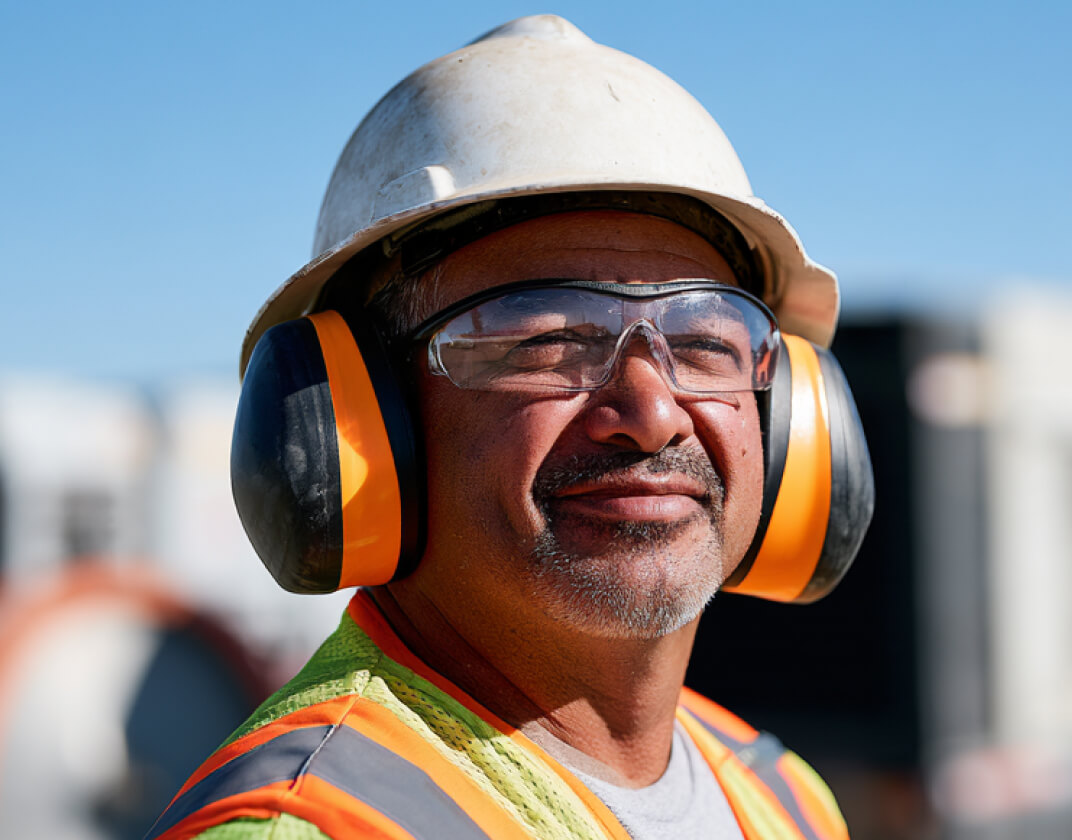
Picture a pipefitter 20 years into his career, standing in the morning safety briefing on a hyperscale build. He’s nodding along, but he’s catching maybe half of it. The generator behind the laydown yard doesn’t help. The real problem is that his hearing has been slipping for years, a few decibels at a time, and nobody caught it.
That’s how noise works on a jobsite. Generators, jackhammers, concrete saws, compressors and heavy equipment run from first shift to last. Your crews get used to it. Their ears don’t.
Noise-induced hearing loss is one of the most common occupational illnesses in the country. It’s also one of the most preventable. The catch is that it happens slowly and without pain, so by the time a worker notices, the damage is permanent.
October is National Protect Your Hearing Month, which makes it a good time to take a hard look at how your sites handle noise. Here’s what it takes to prevent hearing loss, why regular hearing tests matter so much, and how to build a hearing conservation program that works in the field.
Preventing Workplace Hearing Loss Starts With Knowing Your Noise
The CDC estimates that 22 million U.S. workers are exposed to potentially damaging noise on the job every year. Loud noise destroys the tiny hair cells in the inner ear, and once they’re gone, they don’t grow back. Surgery and medication can’t fix it. Hearing aids help, but they never bring hearing back to normal.
Here’s a simple field test. If someone must raise their voice to be heard by a coworker about three feet away, the area is likely above 85 decibels. Ringing ears or muffled hearing at the end of a shift are other red flags.
Know the thresholds
| Benchmark | Level (8-hour average) | What it means |
|---|---|---|
| NIOSH recommended limit | 85 dBA | Keep exposure below this to minimize hearing loss |
| OSHA action level (general industry) | 85 dBA | Full hearing conservation program required |
| ANSI/ASSP A10.46 (construction consensus standard) | 85 dBA | Hearing loss prevention recommended for construction and demolition crews |
| OSHA permissible exposure limit | 90 dBA | Engineering or administrative controls required, plus a hearing conservation program in construction |
The gap between those numbers matters. NIOSH has found that significant hearing loss still happens at OSHA’s 90 dBA limit. Smart contractors use 85 dBA as their trigger regardless of what the minimum requires.
Control the noise before you hand out earplugs
OSHA treats hearing protection as the last line of defense, not the first. The most effective programs work from the source outward.
1. Engineering controls
Buy quieter tools, keep equipment maintained and lubricated, and use barriers, curtains or enclosures around generators and compressors.
2. Administrative controls
Schedule the loudest work when fewer people are around, rotate crews off noisy tasks, and keep non-essential workers back. Doubling your distance from a noise source in open space cuts the level by about 6 dBA.
3. Hearing protection
Earplugs and earmuffs fill the gap when controls aren’t enough. They only work if they fit and workers wear them, which is where testing and training come in.
Why Hearing Tests Matter for Your Workforce
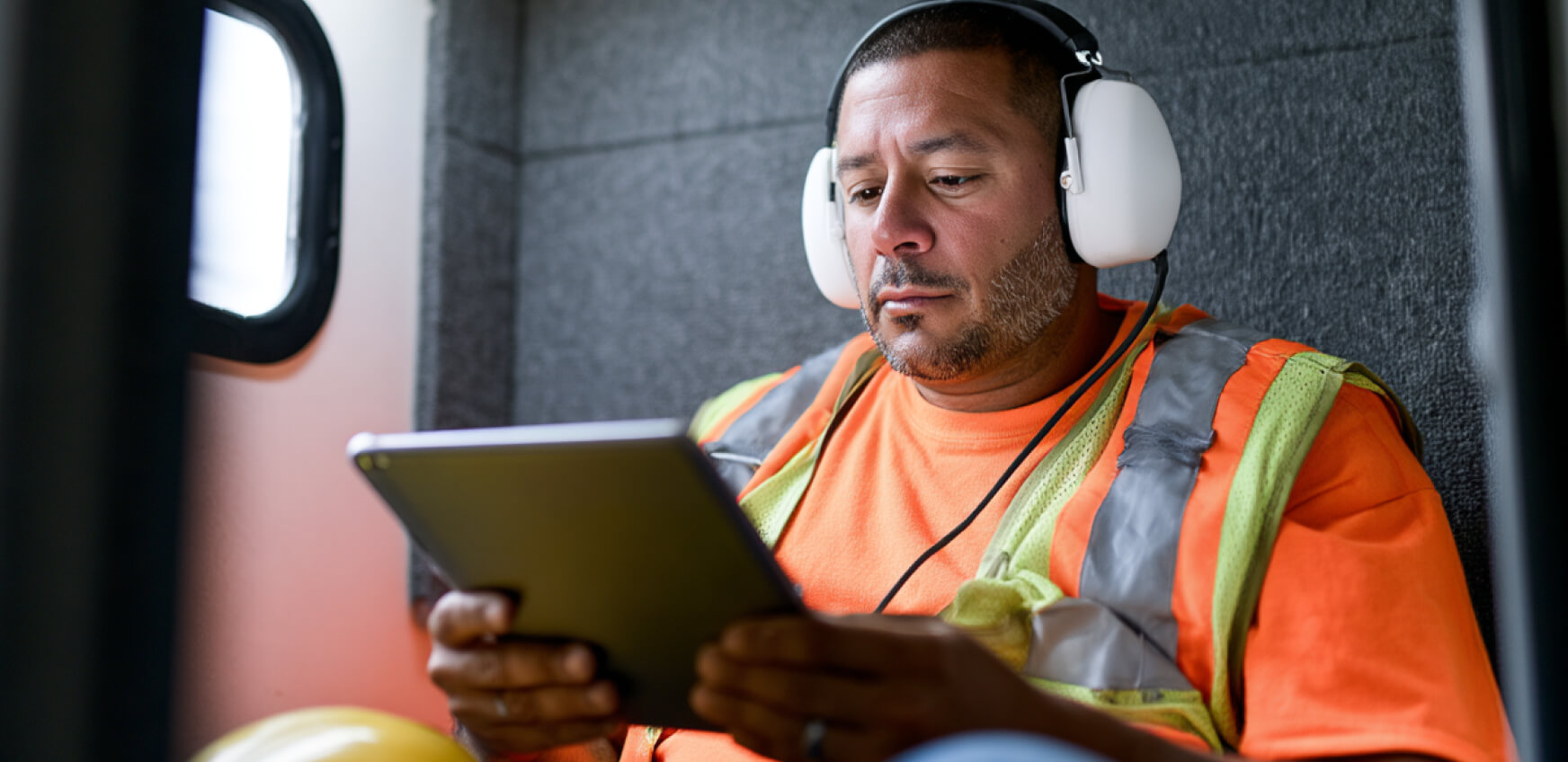
Audiometric testing is the only reliable way to know whether your noise controls and hearing protection are working. Noise-induced hearing loss creeps in gradually and doesn’t hurt, so most workers won’t notice it until it’s already serious. A hearing test catches it early.
How it works
Every worker in a hearing conservation program gets a baseline audiogram within six months of their first exposure at or above the action level. That becomes the reference point. After that, each worker gets an annual audiogram that’s compared against the baseline.
If the annual test shows an average drop of 10 dB or more at 2,000, 3,000 and 4,000 Hz in either ear, that’s a Standard Threshold Shift (STS). It’s an early warning that hearing is slipping, usually well before the worker notices any change.
What employees get out of it
- Early detection. A shift caught this year can be stopped before it becomes permanent, life-changing hearing loss.
- Better protection. Results show whether a worker’s earplugs or muffs actually fit and work for them, so they can be refitted with something better.
- Real awareness. Seeing their own audiogram change makes the risk personal in a way a toolbox talk never will. Workers who see the numbers tend to wear their protection.
- Quality of life. Hearing loss affects conversations at home, time with family and long-term health, not just work.
What employers get out of it
- A safer site. A study of nearly 9,000 manufacturing workers found a 25% higher risk of acute injury among those with tinnitus combined with high-frequency hearing loss. Workers who can’t hear backup alarms, radios or a shouted warning are at risk.
- Fewer recordables. Under OSHA recordkeeping rules, a work-related STS where total hearing level reaches 25 dB or more goes on the OSHA 300 Log. Catching shifts early and intervening keeps cases from reaching that point.
- Proof your program works. Trends across your workforce show which crews, tasks or sites need better controls.
- Compliance documentation. Audiogram records support your program if OSHA or an owner’s safety team comes asking.
How to Build a Hearing Conservation Program That Works in the Field
OSHA requires a hearing conservation program at 85 dBA in general industry and above 90 dBA in construction. The program itself looks the same either way, and OSHA notes that workplaces with effective programs see higher productivity and less absenteeism. Here are the building blocks.

1. Measure the noise
Start with area surveys and personal noise dosimetry to find out who is exposed and how much. Re-monitor whenever equipment, tasks or site layout change, which on a construction project is often.

2. Identify who’s in the program
Anyone at or above your trigger level gets enrolled. Tell workers their monitoring results and let them observe the measurements.

3. Fix the noise at the source
Use the engineering and administrative controls above before relying on PPE. Every few decibels you remove lowers risk and makes communication easier.

4. Provide the right hearing protection
Offer a variety of earplugs and muffs at no cost, fit them to each worker, and check that they reduce exposure enough for the noise on your site. Fit testing takes the guesswork out.

5. Run baseline and annual audiograms
Get baselines in place within six months of first exposure, then test every year. If a test shows a Standard Threshold Shift, retest within 30 days, notify the worker in writing within 21 days of confirming it, and refit or upgrade their protection.

6. Train every year
Cover how noise damages hearing, how to insert earplugs correctly, and what audiogram results mean. Make it hands-on and specific to the tools and tasks your crews actually use.

7. Keep good records
Track noise surveys, audiograms, training and STS follow-ups over each worker’s career. Long-term trends are what make the testing valuable.

8. Review and improve
Look at results across crews and sites at least once a year. Rising shifts in one trade or area tell you where controls need work.
One challenge is specific to large industrial and construction sites. Workers rotate in and out, contractors change by phase, and sending crews offsite for hearing tests eats hours of productive time. That’s usually where programs break down.
Bring Hearing Conservation to the Jobsite
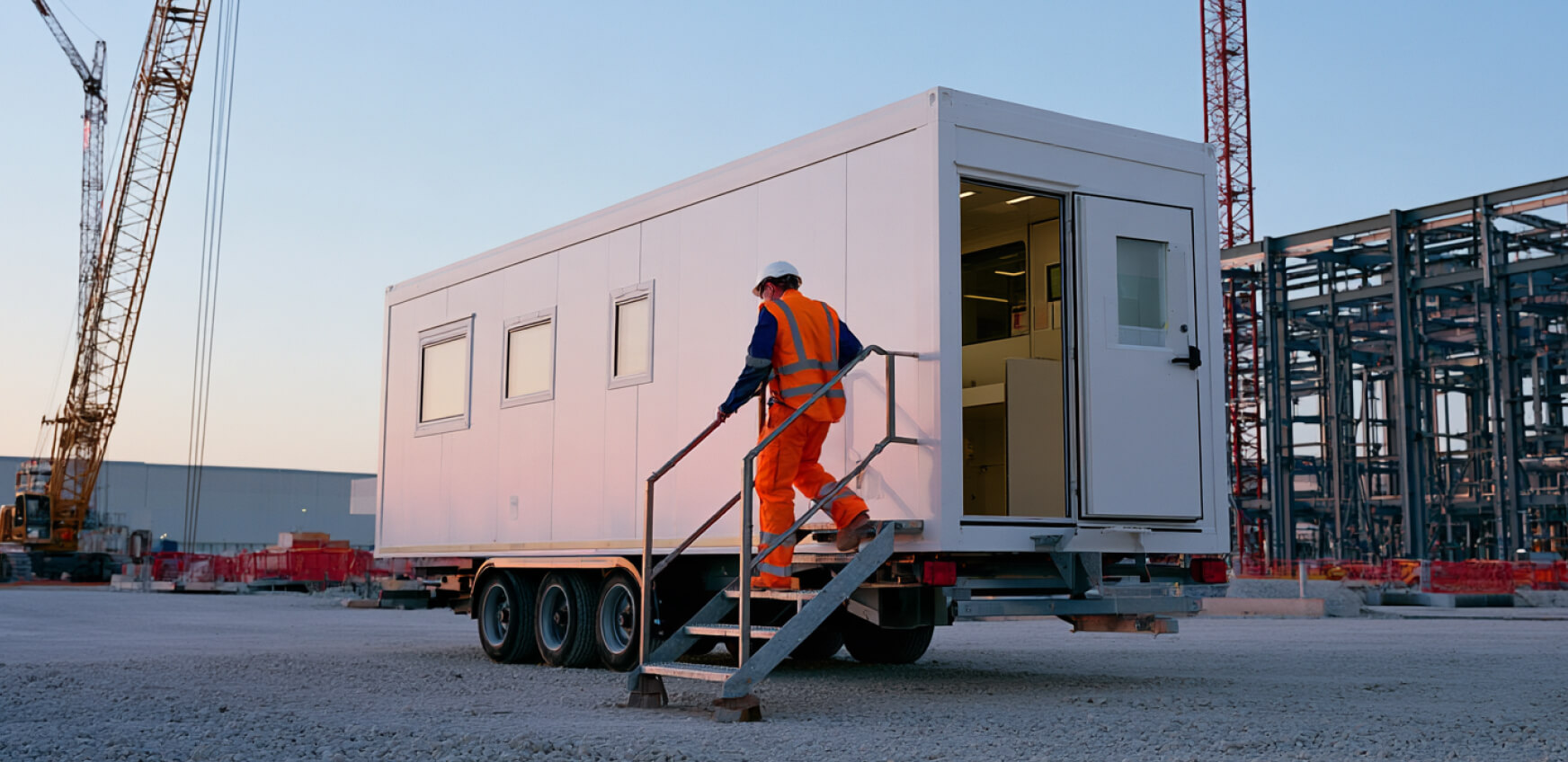
The best hearing conservation program is the one your crews actually go through. When occupational health lives on your site, baselines happen on day one instead of months later, annual tests don’t pull people off the job for half a day, and shifts get caught and followed up while the worker is still on your project.
The time savings add up fast. Each onsite visit saves 3 to 4 hours compared with a trip to offsite urgent care. Multiply that across a crew of several hundred getting annual audiograms, and that’s a lot of time back on the tools instead of in a waiting room.
This National Protect Your Hearing Month, take a fresh look at your noisiest tasks and ask whether your program is keeping up. Talk to OnPoint about onsite occupational health for your next project.
About OnPoint
OnPoint delivers onsite safety, occupational health and site services for oil and gas, energy and utilities, data center construction, and manufacturing projects. Our Audiometric & Respirator Fit Testing service handles hearing conservation and respiratory protection right on your jobsite. That includes baseline and annual hearing tests, standard threshold shift identification, respirator fit testing and the documentation to back up OSHA compliance. Your crews get tested without leaving the site, and your safety team gets one partner to keep the program on track from mobilization to closeout.

