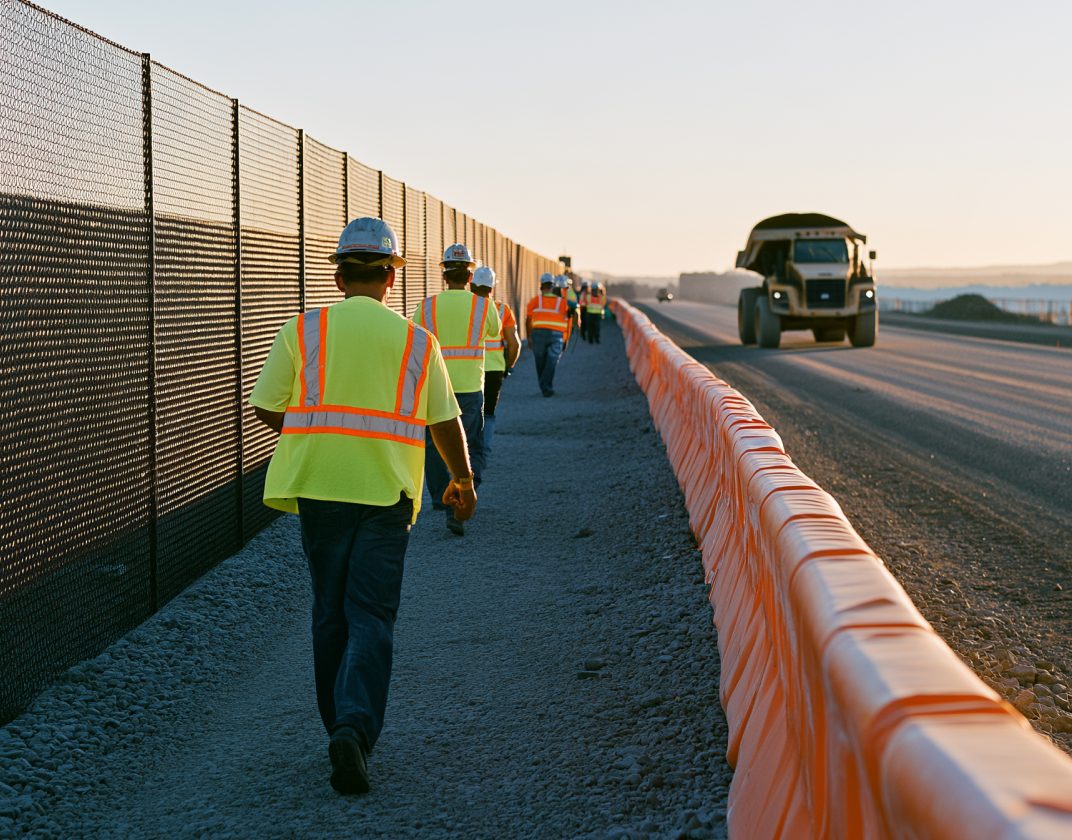
October is National Pedestrian Safety Month. NHTSA uses the month to remind drivers to slow down and look out for people on foot. Their message is built on a simple idea. At some point in the day, everyone is a pedestrian.
That is true on public roads. It is even more true on an industrial job site.
Think about what moves through a hyperscale data center build or a plant turnaround on a normal day. Crew buses rolling in before dawn. Concrete trucks and flatbeds queued at the gate. Telehandlers, excavators and loaders working the same ground where hundreds or thousands of people are walking to their work areas. Every one of those workers crosses a vehicle path at some point in the shift. Many cross dozens of times.
The difference between a public road and a job site is that the job site changes every week. Laydown yards move. Access roads get cut off by trenching. A route that was fine on Monday runs straight through an active crane pick by Thursday. Nobody designed the traffic system on purpose, so it evolves on its own, and the people on foot are the ones who absorb the risk.
This post is about treating site transportation as a safety function instead of a logistics afterthought. Planned traffic patterns, defined routes and real vehicle standards are what keep people and machines from meeting in the wrong place.
Transportation is a safety function, not a logistics line item
The numbers back this up. Struck-by incidents are one of OSHA’s Focus Four construction hazards, alongside falls, caught-in-between and electrocution. A large share of those struck-by deaths involve vehicles and mobile equipment, not falling objects.
A few data points worth keeping in front of your leadership team.
54
The National Safety Council’s analysis of BLS data shows an average of 54 worker-pedestrians killed each year after being struck by vehicles in work zones. That figure covers all work zone incidents, not just public roads.
850
In 2024, work zone crashes killed 850 people and injured more than 42,000, according to the same NSC data.
443
BLS counted 962 worker deaths at road construction sites from 2003 to 2010. Nearly half, 443, were workers struck by a vehicle or mobile equipment, and construction equipment was involved about as often as passing traffic.
70+
OSHA reports that more than 70 workers died in backover incidents in 2011 alone, and dump trucks top OSHA’s list of vehicles involved in backover fatalities.
Backovers deserve special attention because they are almost entirely preventable. The driver cannot see the person. The person does not hear the alarm over the site noise. Nobody was assigned to watch. Each of those gaps is a planning failure, not an act of nature.
Here is the part that gets missed. Most of these incidents do not happen because someone was reckless. They happen because the vehicle route and the walking route were never separated, and on that particular day, at that particular minute, the two crossed. That is a design problem, and design problems get fixed on paper before they get fixed in the field.
Safe transportation practices on the job site
The goal is simple. People and machines should rarely share the same ground, and when they must, everyone should know exactly where and when it happens.
Start with a site traffic management plan
A traffic management plan is a drawing and a set of rules, not a slide. It shows every vehicle route, every pedestrian route, every crossing point, every one-way loop, every laydown and staging area, and every gate. It assigns speed limits by zone. It identifies where buses load and unload and where that activity is kept away from active work.
The plan should be built before mobilization and revisited every time the site layout changes. On a large build that may be weekly. Treat the plan as a living document owned by someone with the authority to update it and the standing to enforce it.
Separate people from vehicles wherever possible
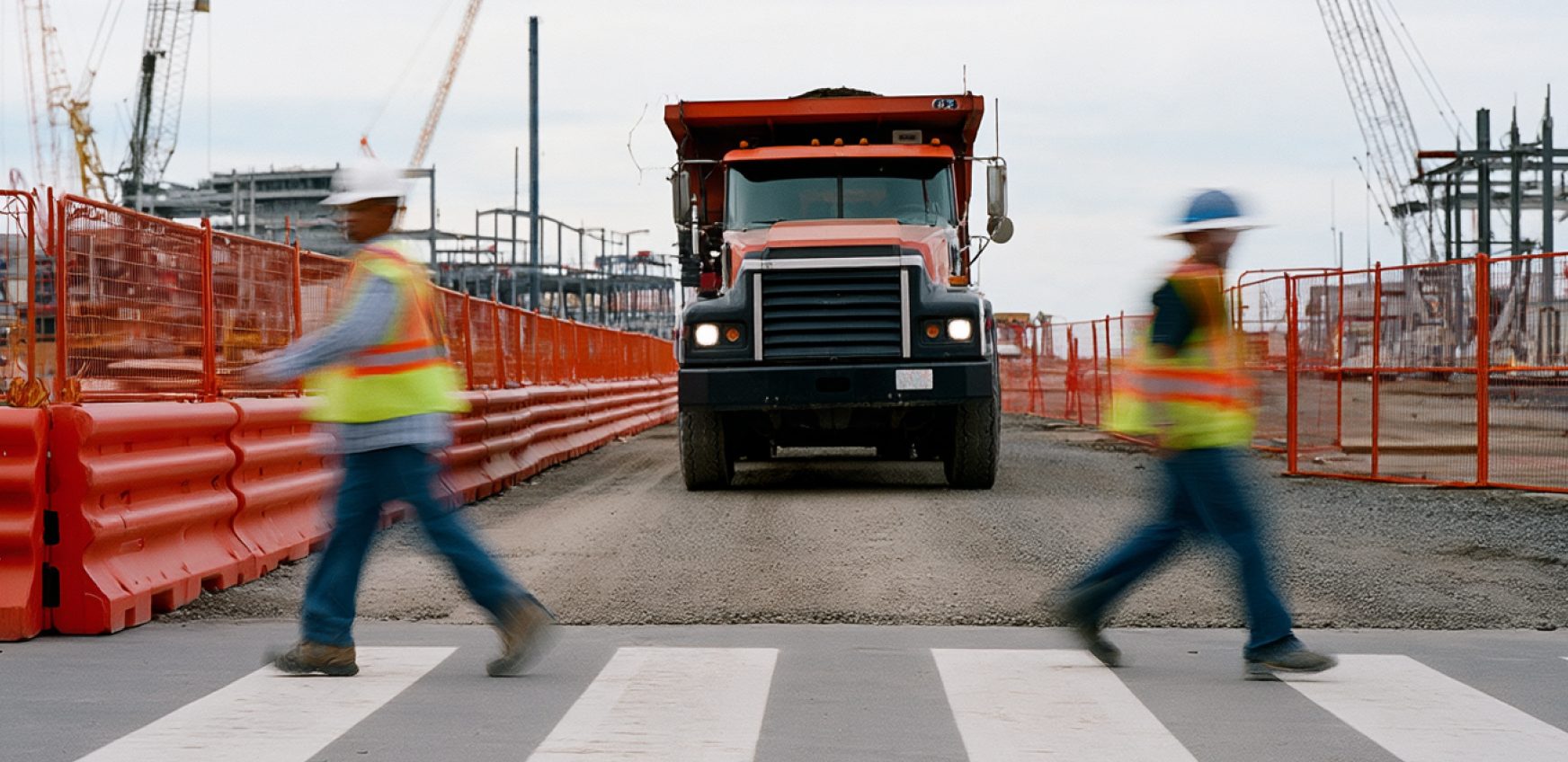
Physical separation beats awareness every time. Barriers, fencing, jersey walls and clearly marked walkways keep pedestrians out of haul routes without relying on anyone paying attention. Where walkways must cross vehicle routes, mark the crossing, light it, and give pedestrians the right of way with a stop condition for vehicles.
A good rule of thumb. If a worker has to think about whether it is safe to walk somewhere, the route is not finished.
Plan people movement like a transit operation
On a site with thousands of workers, the shift change is the highest risk window of the day. Buses are arriving, personal vehicles are parking, crews are walking in, and the night shift is walking out, all at once. Dedicated bus lanes, staggered arrival windows, remote parking with shuttle service, and a clear path from drop off to badge in all reduce the crowd of pedestrians moving through live vehicle areas.
This is where transportation coordination pays off twice. It keeps people safe and it gets crews to their work areas faster.
Control the gate
Every delivery, every vendor and every visitor should enter through a controlled point where they receive the site traffic rules, the speed limit, and the route they are allowed to use. Drivers who have never been on your site are the ones most likely to take a wrong turn into a pedestrian area. A two-minute briefing at the gate prevents that.
Communicate the plan to everyone, every day
The best traffic plan in the world fails if the new concrete crew did not get it. Cover current routes and any changes in the daily toolbox talk. Post the site map at every entrance. Make the plan available in the primary languages spoken on site. When a route changes, say so out loud before the shift starts, not in an email nobody opens.
Vehicle and equipment safety standards
A good traffic plan assumes the vehicles on it are safe to operate. That assumption needs to be checked every shift.
Know the baseline
OSHA’s construction standards set the floor. 29 CFR 1926.601 covers motor vehicles operating on an off-highway job site that is closed to public traffic, and 1926.602 covers material handling equipment like loaders, dozers and forklifts. The requirement that matters most for people on foot is 1926.601(b)(4). If a vehicle has an obstructed view to the rear, it either needs a reverse signal alarm audible above the surrounding noise level, or it only backs up when an observer signals that it is safe. No alarm and no spotter is a violation, and more importantly, it is how people get backed over.
State plan states may have stricter requirements, and most large owners and general contractors layer their own standards on top. Make sure every subcontractor on site knows which rules apply.
Inspect at the start of every shift
Brakes, lights, horn, reverse alarm, mirrors, windows, seat belts and backup cameras. OSHA’s 1926.601(b)(14) requires that every vehicle in use is checked at the beginning of each shift and that defects are corrected before it goes back into service. Operators should walk around their equipment before the first move of the day and document it. A reverse alarm that quit working on Tuesday should not still be quiet on Friday.
Qualify every operator
Operating a telehandler or a dump truck on a crowded site is a skill, and it should be treated like one. Verify licenses and certifications before anyone climbs into a cab. Orient operators to the site traffic plan, the speed limits, and the pedestrian crossings specifically. An experienced operator who does not know your site is still a new operator on your site.
Use spotters, and set them up to succeed
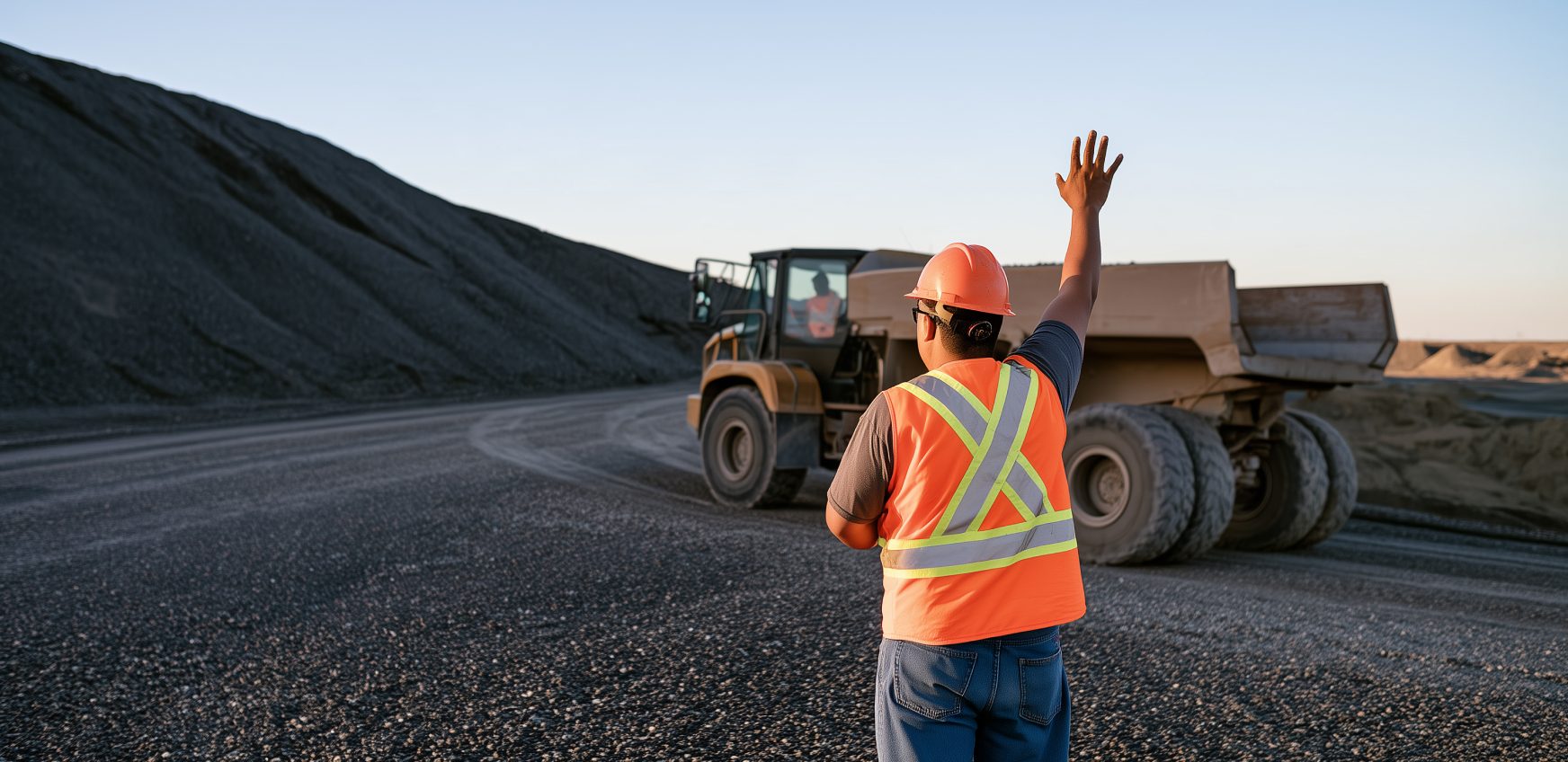
Spotters are not just extra bodies. They need high visibility clothing, a set of hand signals agreed with the driver, a position where the driver can see them, and nothing in their hands. If the driver loses sight of the spotter, the vehicle stops. If the spotter is on a phone, the spotter is not a spotter.
Manage the human factors
Speed, fatigue and distraction cause vehicle incidents on job sites for the same reasons they do on highways. Enforce site speed limits with the same seriousness as fall protection. Watch work and rest cycles for drivers and operators, especially during turnarounds and schedule pushes when 12-hour shifts become 14. Prohibit phone use in any moving vehicle on site, no exceptions for supervisors.
Add technology where it earns its keep
Backup cameras, proximity sensors and radar-based detection systems have gotten cheaper and more reliable. They are not a replacement for a traffic plan or a spotter. They are a backstop for the moment the plan and the spotter both miss something. On high traffic sites with mixed heavy equipment and foot traffic, that backstop is worth the cost.
A quick check for your site this month
National Pedestrian Safety Month is a good excuse to walk your own site and ask a few honest questions.
Is there a current site traffic management plan, and does it match what is actually on the ground today?
Can a worker walk from the bus drop off to their work area without stepping into a vehicle route?
Are pedestrian crossings marked, lit and known to every operator?
Does every vehicle with an obstructed rear view have a working alarm or an assigned spotter?
Did every operator on site complete a documented inspection this morning?
Does every delivery driver get the traffic rules at the gate before entering?
When the layout changed last, how many days passed before the traffic plan and the toolbox talk caught up?
If any answers were ‘no’ or ‘I’m not sure’, it’s a good time to take a closer look at pedestrian safety across your job site.
About OnPoint
OnPoint delivers onsite safety, occupational health and site services for oil and gas, energy and utilities, data center construction, and manufacturing projects. Our Industrial Logistics & Materials Management service covers the transportation side of site safety, from pre-mobilization site logistics planning that identifies loading zones, emergency access and traffic separation, to workforce transportation that moves crews on DOT-compliant buses with professional CDL drivers on optimized routes. Our logistics coordinators work alongside your safety team on delivery timing, equipment placement and traffic routing, so people and machines move on purpose instead of by accident.
Want to see what walking time and transportation delays are costing your project? Run the Transportation Efficiency Calculator or talk to our team.

