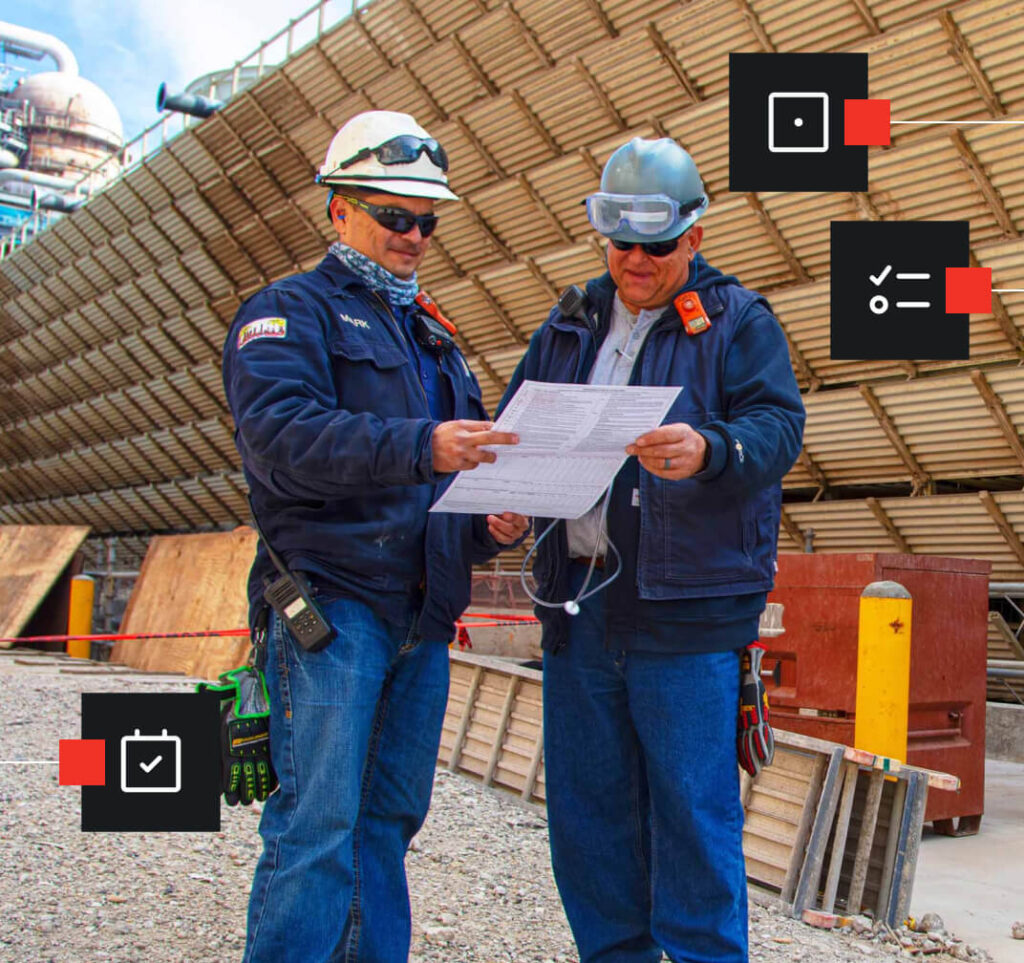
Ask a project team when logistics starts and most will say it starts when the crews do. The buses arrive, the gate opens, work begins, and logistics is whatever keeps that running. That is what the schedule shows. It leaves out the part that already happened.
By the time crews reach the gate on day one, a lot of what determines their productivity has been settled. Where the laydown sits relative to the unit. Whether parking was planned against peak headcount or against the number on the original bid. Whether the rental equipment on site was received, inventoried, and staged, or dropped wherever the truck could reach. Those are logistics decisions, and they are finished before anyone turns a wrench.
The same thing happens at the other end. After the last crew leaves, someone still has to locate every rental asset on site, get it off rent, and clear the temporary facilities. That work has no crews attached to it, no schedule pressure behind it, and often no clear owner. It does have a meter running.
Mobilization and demobilization are the two phases of an industrial project where logistics is least visible and least often scoped. They are also the phases most likely to land on someone who was hired to do something else.
What Happens During Mobilization
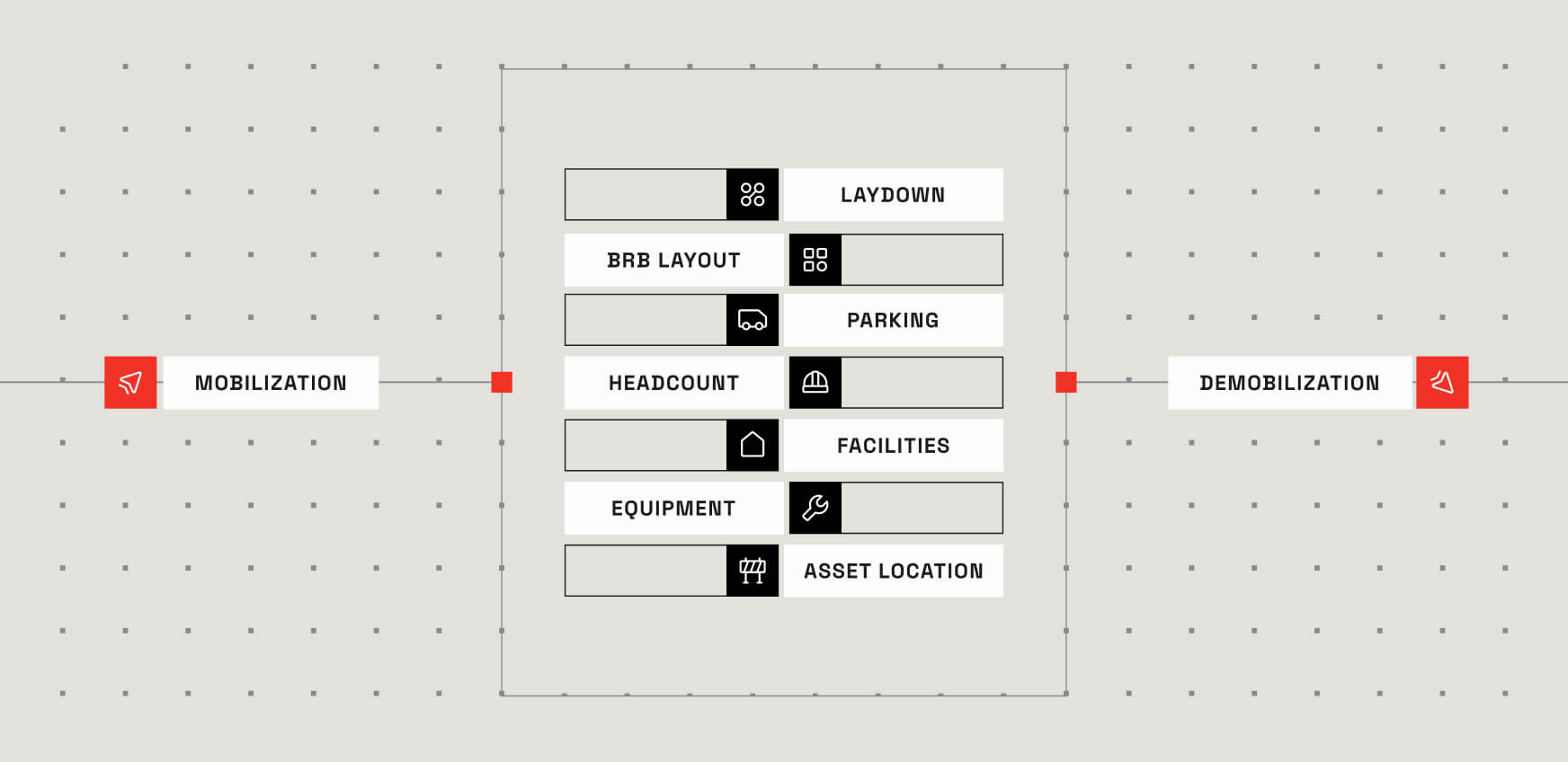
Start with the front end, because that is where the decisions get made. Before a single craft worker arrives, a functioning site needs a specific and fairly long list of work done:
- Break and relief building layout, positioned close enough to the work face that a break does not eat into the shift
- Parking and traffic flow planned against peak headcount, not average
- Laydown areas mapped against the sequence of the event, so the equipment needed first is not behind the equipment needed last
- Rental equipment received, inventoried, tagged, and staged
- Temporary facilities prepped: offices, lunch areas, restrooms, water
- Fuel routes established, with access control decided before the first delivery
None of it is complicated in isolation. All of it takes time, and it has to happen in a window when the project is also finalizing scope, confirming craft, and negotiating with vendors.
So, it gets absorbed. On projects without a dedicated logistics team, this work lands on the client’s own coordinators, on the general contractor, or on whichever contractor has capacity that week. The people doing it are rarely the people it was budgeted for, because it was usually not budgeted at all.
The Part That Shows Up on Someone Else’s Invoice
Unbudgeted work does not go undone. It gets reassigned, and the reassignment is where the cost starts to disappear.
Watch what happens when the layout work has no owner. In our experience, the pattern is consistent. Carpenters get pulled off a scaffold crew to build decking for break buildings and lunch tents. A maintenance group inherits the water totes. Whoever has a spare operator moves equipment between units. Every one of those tasks gets done, and everyone comes out of a headcount budgeted for something else.
That is what makes the cost hard to see. It does not show up as a logistics overrun. It shows up as a scaffold crew running behind and a maintenance group that could not get to its own list, and those are much harder to trace back to a cause at the closeout meeting.
Demobilization Has a Meter Running
At least the front-end cost has people attached to it. Somebody notices when a scaffold crew falls behind, even if nobody connects it to logistics. The back end works differently. There is no crew waiting and no schedule left to slip, which is precisely why the leakage there is easy to miss.
On a large event you may have well over a thousand pieces of rental equipment spread across the site. Some of it was never formally tracked from the moment it came through the gate. When the event ends, somebody has to find all of it.
What often happens instead is that the obvious assets go back and the rest stay put. A lift behind a unit. A generator in a laydown nobody is using anymore. A compressor that got moved twice and logged neither time. Each one keeps billing until an invoice review catches it or the rental company calls to ask.
Our cost model assumes roughly thirty percent of rental assets on an unmanaged site go untracked. On a twelve-hundred-piece fleet, that is around three hundred sixty pieces. Even at a modest hundred and forty dollars apiece, which is realistic for smaller items and conservative for anything larger, that is fifty thousand dollars, and none of it is visible during the event that caused it.
The same pattern shows up earlier, too. When equipment cannot be located, crews do not wait indefinitely. They order another one. The original is still on site, still on rent, sitting idle on the far side of the unit while its replacement gets delivered.
Why Buying the Pieces Does Not Solve It
None of this happens because nobody thought of it. It happens because no single party is accountable for the whole of it, and that turns out to be harder to fix than it sounds.
You can buy fuel service. You can buy equipment management. You can buy ground labor and housekeeping. In most industrial markets, there are vendors for each.
Harder to buy is somebody owning all of it together, across all three phases. That gap matters more than it sounds, because coordinating five vendors is itself a job. It lands on a general contractor or a turnaround coordinator who already has one, and it lands hardest during mobilization, when that person is least able to absorb it.
There is a misconception underneath this that we run into often. Many first-time clients assume a logistics provider supplies janitors and cleanup labor. Working from that assumption, keeping the rest in-house looks reasonable. What they are actually keeping is logistics coordination, fueling, rental equipment management, hydration, traffic control, and the entire mobilization and demobilization sequence, delivered part-time by people hired for other work.
It is also why a provider who arrives at mobilization cannot hand you a ready site. The plan that makes a site work was written months earlier. Showing up on day one means inheriting whatever was already decided.
Where the Line Sits
All of which argues for dedicated logistics support. It does not argue for it everywhere.
Not every project needs a dedicated logistics team. A small maintenance event with a hundred craft can reasonably absorb this work into existing supervision.
In our experience the practical threshold sits somewhere around two hundred fifty craft on site. Above that, span of control degrades quickly. There are too many moving parts across too much ground for supervision to manage between other duties, and the seams between the people covering it start showing up in the schedule.
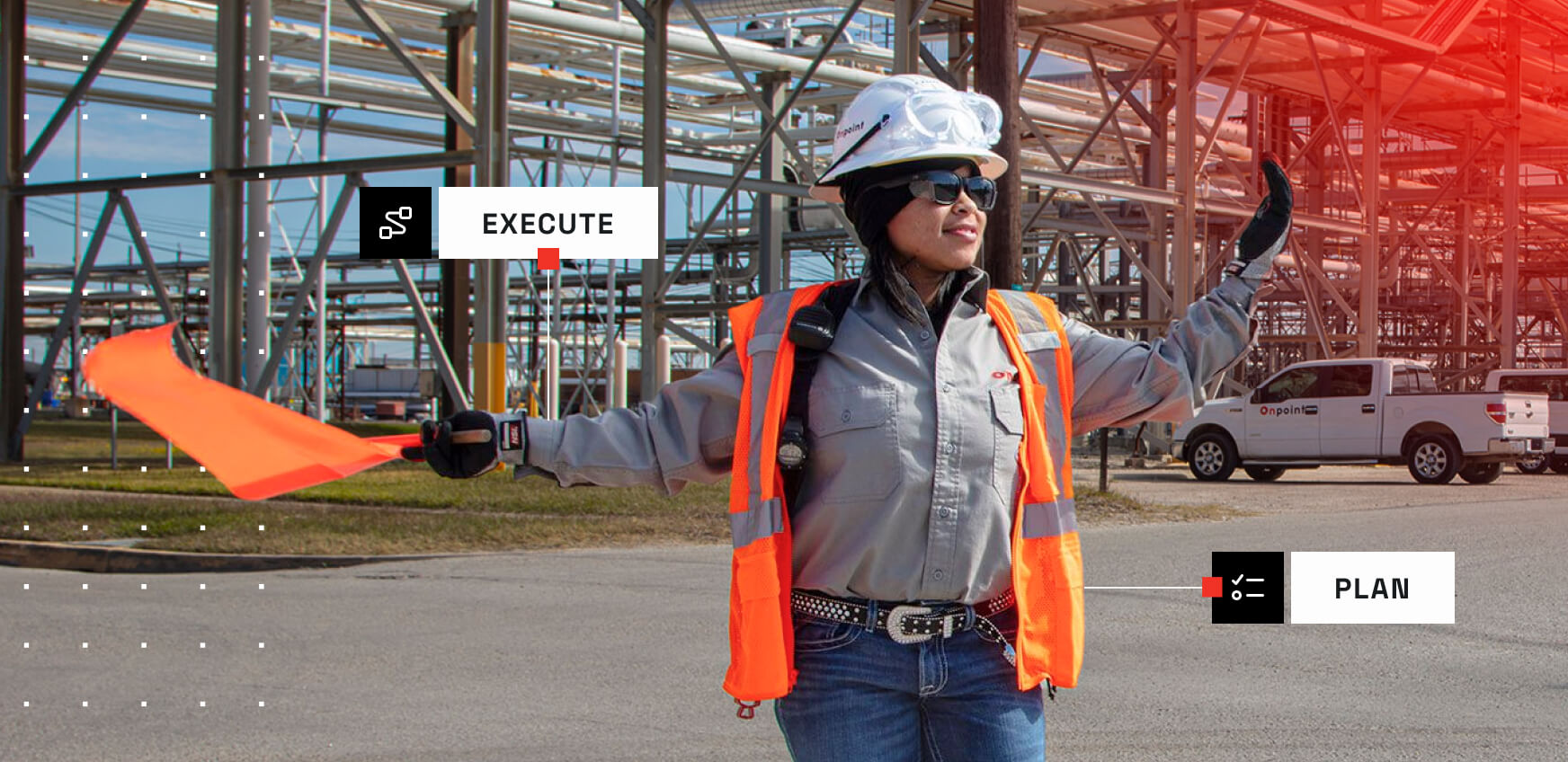
The signs are consistent enough to be diagnostic. Parking bottlenecks and long waits at shift change. Critical welds stopping because a piece of equipment ran out of fuel. Contractors walking too far from the work area to find drinking water or a restroom. Rental equipment that is not available when it is needed. Poor housekeeping in lunch rooms and offices. Craft pulled off their own scope to move equipment or build temporary facilities.
Any one of those reads like a bad day. Together, they are a plan that was never written.
Putting a Number On It
Most project teams recognize that list. Far fewer have ever put a number against it, and that is the more useful exercise.
It persists because it is almost never measured. Projects rarely carry a logistics line item, so the cost surfaces inside craft labor, where isolating it is difficult.
We built the Logistics ROI Calculator to make it visible. Enter your peak craft headcount and when your logistics plan was built, and it estimates what an unplanned site costs across the event, in dollars, in craft hours, and per worker.
It deliberately leaves out mobilization and demobilization. We do not yet have a defensible way to price absorbed coordinator time, and we would rather exclude it than guess. The figure it produces is what you are carrying before either of those phases is counted.
For most teams, it lands higher than expected. Which is the argument for planning it earlier.
About OnPoint
OnPoint manages the full industrial logistics scope under one team, from mobilization through demobilization. Logistics coordination, fueling services, rental equipment management, ground support, hydration, sanitation, and traffic control. Learn more at onpoint-us.com.

